







Sep
Every year on September 21, people take time to observe the International Day of Peace, also known as World Peace Day. It is a moment set aside by the United Nations to remind us of our common humanity and the possibility of a more harmonious world. Yet as World Peace Day 2025 approaches, the global landscape seems more fragile than ever. Wars rage, political violence escalates, and mistrust spreads like wildfire.
From the devastating conflict between Israel and Iran, to the brutal war in Ukraine, to the shocking assassination of American political commentator Charlie Kirk, recent events have shown how fragile peace can be. Yet this is precisely why this commemoration is important: it forces us to confront the reality of violence while reaffirming our commitment to finding better ways forward.
The Cost of Endless War
Peace is often defined as the absence of war, but the conflicts of 2025 show that true peace must be deeper. The long-simmering hostility between Israel and Iran has escalated into a series of devastating attacks on civilian areas. Attacks on hospitals, prisons, and residential areas in Tehran and elsewhere have left ordinary people bearing the brunt of geopolitical rivalry. Families have been displaced, children traumatized, and communities torn apart.
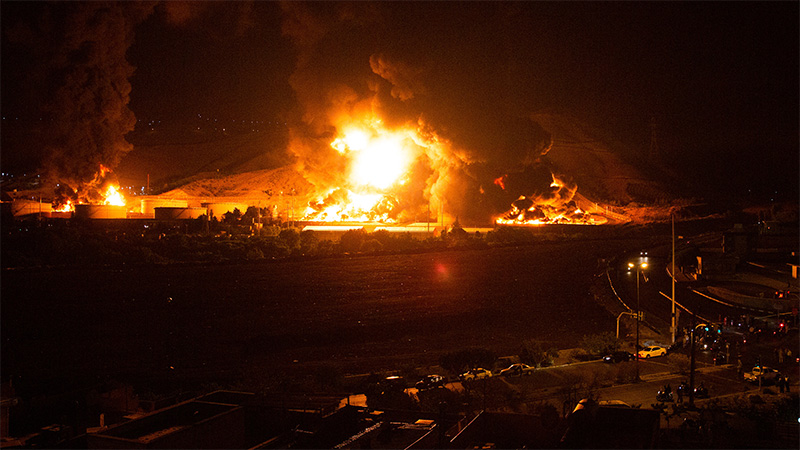
Meanwhile, the Russia-Ukraine war, which began in 2022, continues with no sign of resolution. Whole cities have been razed to the ground. Millions of Ukrainians have fled to seek refuge abroad, while those who remain suffer from shortages of food, heat, and safety. The conflict has reshaped global security, energy markets, and political alliances, showing how a war can spread across the planet.

On World Peace Day 2025, these wars serve as a painful reminder that the pursuit of dominance leaves only destruction in its wake. Alongside the statistics of casualties and displacement are countless personal stories—parents grieving for their children, young people losing their futures, and societies damaged across generations.
Violence Closer to Home
War is not the only threat to peace. Even societies without tanks on their streets or missiles overhead are grappling with their own violent struggles. The United States was shaken on September 10, 2025, when Charlie Kirk, a polarizing but influential conservative activist, was shot dead while speaking at Utah Valley University. Authorities described it as a targeted political assassination.


While vastly different in scale from the wars in the Middle East or Eastern Europe, this act of political violence highlights another form of conflict: the deep polarization eating away at democracies. When disagreements evolve into hatred, and hatred evolves into gunfire, peace erodes from within.
On World Peace Day 2025, it is worth asking: how do we define peace if even the most developed societies are struggling to maintain civil dialogue without bloodshed? The tragic killing of Kirk forces us to confront the reality that peace is not only about avoiding global wars but also about ensuring safety, respect, and tolerance in everyday life.
What Peace Demands in 2025
The theme of peace in 2025 cannot be limited to ceasefires and treaties, though both are urgently needed. Peace today must include compassion, resilience, and justice. In practical terms, this means:
- Diplomatic persistence in conflicts like Israel-Iran, where retaliation has become the default. Diplomacy is difficult, but without it, violence simply cycles endlessly.
- Support for victims and refugees from Ukraine and other war zones. Providing shelter, education, and healthcare is not charity—it is part of building long-term peace.
- Confronting political polarization at home by encouraging respectful discourse, cracking down on hate-fueled violence, and creating space for dialogue rather than division.
- Recognizing the role of ordinary people in shaping peace. Every act of kindness, every rejection of violence in speech or action, contributes to a culture where peace can grow.
On World Peace Day 2025, the call is not just to governments or international organizations. It is to individuals. Each of us can take steps toward building bridges, whether across cultural divides or personal disagreements.
Global Reflection in Troubled Times
The International Day of Peace was first established in 1981, and over the decades the world has celebrated moments of reconciliation and mourned great loss. Yet rarely has its message been as urgent as it is today.
Peace is fragile because it requires trust, empathy, and cooperation – all qualities that are under strain in the current climate. Wars test our endurance. Political assassinations test our faith in institutions. Social media, rife with misinformation and hate, tests our patience and civility. But peace is also sustainable because it is rooted in something universal: the human desire to live free from fear.

That is why World Peace Day 2025 cannot be dismissed as a symbolic holiday. It is a reminder that even in dark times, humanity has the ability to choose the light. Civil society groups around the world will mark the day with marches, vigils and educational events. Children in classrooms will create art about unity. Communities will hold interfaith dialogues. These may seem small compared to wars and political assassinations, but they are important. They foster a culture that rejects violence and supports peaceful coexistence.
Lessons from Pain, Reasons for Hope
What do recent events teach us about peace? They teach us that peace is never guaranteed. It must be nurtured, defended, and demanded. The world of 2025 feels divided, but history offers hope. Former enemies have become allies. Ceasefires hold. Walls have fallen. If peace was once possible, it can be again.
In Ukraine, grassroots organizations continue to provide aid and comfort, demonstrating resilience despite the devastation. In Israel and Iran, voices calling for diplomacy are heard even amid airstrikes. And in the United States, in the wake of Charlie Kirk’s death, leaders across the political spectrum have denounced violence, demonstrating that even bitter rivals can agree on the importance of peace when tragedy strikes.
Conclusion: Choosing Peace
On this World Peace Day 2025, we face some harsh truths: wars continue, political violence worsens, and societies break under pressure. But peace is not a naive dream. It is a deliberate choice, made by nations, communities, and individuals.
Peace does not mean silence or surrender—it means justice, safety, and the ability to dissent without being destroyed. It means creating a world where children in Kyiv, Tehran, Tel Aviv, or Utah Valley can grow up free from fear.
On this World Day of Peace, let us not only mourn what has been lost but also renew our resolve to protect what can still be saved. Because peace is not a gift we inherit—it is a legacy we build together for future generations.